
US mobilizes 200 fighter jets in unprecedented 24-hour operation against threat from North Korea

The drills are a part of the annual Ulchi Freedom Shield exercises, which aim to enhance the joint readiness of the armed forces of South Korea and the United States.
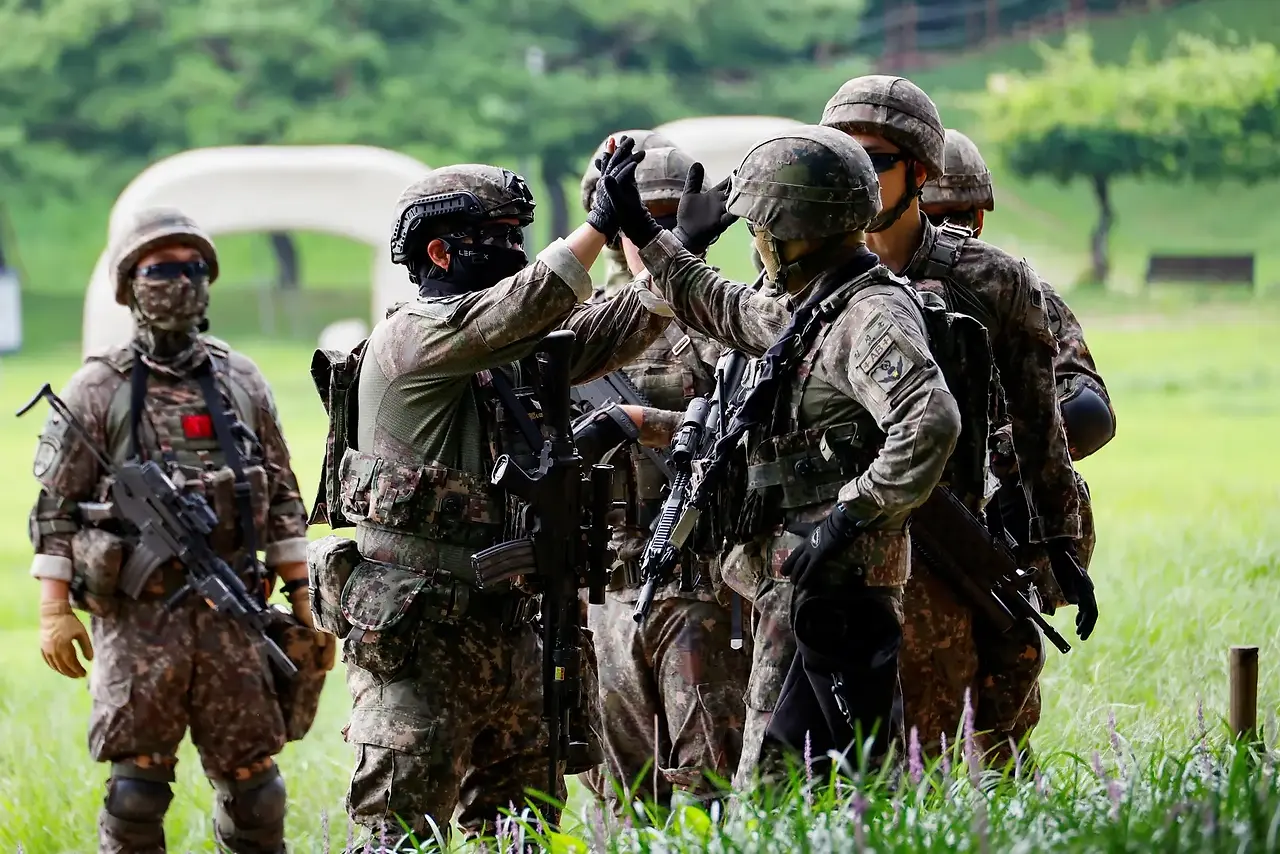
Soldiers take part in an exercise in Seoul this Tuesday (20) - Photo Reproduction / Reuters / Kim Soo-hyeon
In an unprecedented move, the United States and South Korea deployed 200 fighter jets in a continuous 24-hour operation over five days this week in response to a potential threat from North Korea. As announced by the South Korean Air Force this Tuesday (20), the action, which will be the largest joint exercise ever carried out between the two countries. The training, which will take place in South Korean airspace, will also include maneuvers and simulations on the ground, with the aim of confronting the "threat from North Korea", as reported by South Korean forces.
Mobilization Details
The maneuvers are part of the annual Ulchi Freedom Shield exercises, held between the two countries, and began on Monday with simulations of response to terrorist attacks. This year's exercise will match computer simulations, focused on increasing readiness against threats such as missiles, GPS interference and cyber attacks, with field maneuvers and live fire exercises, which will be carried out simultaneously.
South Korean aircraft, which initially carried out defensive patrols, are being directed towards simulated aerial combat scenarios. These exercises include interdiction of enemy aircraft and defense against cruise missiles. Additionally, the United States sent two types of fighter jets to South Korea to participate in the maneuvers, according to the Air Force. The US maintains 28,500 troops in South Korea for joint defense against nuclear-armed North Korea.
Nuclear threat
The escalation of tension on the Korean Peninsula is not a recent phenomenon and is largely associated with repeated missile tests carried out by North Korea. These tests led the US and its allies to carry out military maneuvers with the aim of intimidating the communist regime and containing its aggressiveness. In December, the UN issued a warning to North Korea after the launch of a Hwasong-18 intercontinental ballistic missile (ICBM), which traveled around 1,000 kilometers and reached an altitude of 6,500 kilometers before falling into the sea.
In the same period, the International Atomic Energy Agency (IAEA) reported increased activity at a nuclear reactor at the Yongbyon complex, indicating that the country may be seeking to produce more plutonium for its nuclear weapons. The IAEA expressed concern about the situation and noted that the development of the North Korean nuclear program constitutes a violation of UN Security Council resolutions and is deeply regrettable.
North Korea
North Korea has not yet commented on the extent of the ongoing maneuvers. However, it has often criticized the annual Ulchi Freedom Shield exercises, which began on Monday and run until August 29, claiming they heighten tensions on the Korean peninsula and labeling them as rehearsals for nuclear war. These exercises also come after a recent wave of "balloon wars" between South Korea and North Korea. In response to activists in Seoul, who have sent balloons to North Korean territory with pamphlets critical of Kim Jong-un's regime, flash drives with K-pop and even dollar bills, Pyongyang has retaliated with balloons loaded with trash and feces.
Despite efforts to modernize its air fleet, Pyongyang faces difficulties in incorporating new aircraft and continues to depend on obsolete fighters, including some old Soviet MiGs from the 1950s. On the other hand, the North Korean government has expanded its tactical warfare capabilities with short-range missiles and heavy artillery targeting South Korea, in addition to making significant advances in its nuclear and long-range ballistic missile programs.


