


From Space to Everyday Life: How space technologies are transforming our lives and benefiting society

You may be using space technology right now without realizing it. Initially created to be used only by astronauts, several of these technologies have been adapted and now improve people's lives here on Earth.
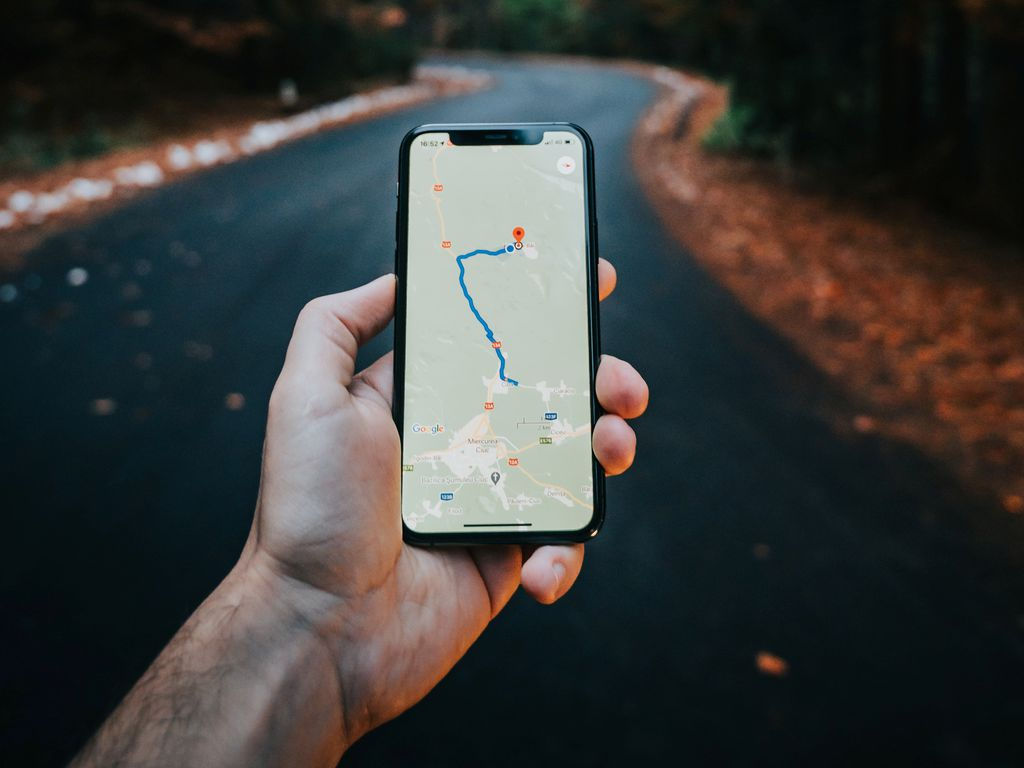
GPS was developed in the early 1970s, with satellites in orbit capable of mapping the entire planet - Photo Reproduction/Reproduction/Tamas Tuzes Katai/Pexels
Since the Space Race era, technologies developed for the exploration of the cosmos have transcended their origins, directly impacting life on Earth. What began as a competition between superpowers to conquer space has evolved into a cooperative pursuit of knowledge and innovation, with tangible benefits for society. Space technologies play a crucial role in several areas of our daily lives, bringing significant advances in communication, health, agriculture, navigation and even our understanding of the environment, meaning you may be using space technology right now without realizing it.
Initially created just for astronauts, several space technologies were adapted and are being used to improve the lives of people on Earth. Digital controls in vehicles were created to facilitate communication in environments where wires are a challenge due to zero gravity. Additionally, some of us enjoy our nights' sleep with memory foam pillows, popularly called the "NASA pillow." These are just a few examples of inventions that demonstrate how we use space technology in our daily lives, even though they were originally developed to meet the needs of space mission crew members.
Space technology has contributed in many ways to our lives
The presence of space technologies in terrestrial homes is not something new and has brought facilities to different aspects of life. This process is similar to what occurs in times of war, when extreme situations require innovative and unusual solutions. When looking for solutions to improve living conditions in space exploration, scientists inevitably end up finding answers to problems faced by us, Earth's inhabitants. Therefore, space technology should be seen not only as a solution to aerospace issues, but as an answer to several problems faced by the general population.
Space technologies used in everyday life
Space exploration has the potential to accelerate the advancement of terrestrial technology. By seeking technological development in space, humanity ends up benefiting by finding adaptable solutions. These solutions are not just limited to innovative products. Space technology also enables improvements in food quality control. Additionally, navigation is another field that has evolved significantly due to space technology, resulting in improved landing strips. Below are some of the many discoveries credited to space research and how they have been applied to homes and other terrestrial facilities.
Global Communication
NASA and other space agencies have always struggled with the size of cameras used to record videos due to restricted space on spacecraft. In the 1990s, engineer Eric Fossum developed a new sensor for video cameras, called CMOS-APS. This sensor was created through the combination of Japanese techniques and innovative chip construction technologies. The success of this initiative was so great that to this day CMOS-APS is used in DSLR cameras and most smartphones.
But one of the most notable advances provided by space technologies in this sector is the revolution in communication. Communication satellites allow TV, telephone and internet signals to be transmitted globally, connecting people in remote and urban regions. Services such as GPS and satellite internet are essential not only for everyday life, but also for military operations, aviation and maritime navigation. Companies like SpaceX with its Starlink project are working to provide high-speed internet in rural and underdeveloped areas, closing the digital divide.
Climate and Environmental Monitoring
Earth observation satellites play a key role in climate and environmental monitoring. They collect crucial data on climate change, deforestation, ocean pollution and natural disasters. This data is vital for scientists to understand the impact of human activities on the planet and develop strategies to mitigate these effects. For example, analyzing satellite data has helped improve the accuracy of weather forecasts, allowing communities to better prepare for extreme weather events.
Health and Medicine
Space technology has also driven advances in healthcare. Instruments developed to monitor the health of astronauts in space have been adapted for use on Earth. An example of this is the creation of the infrared thermometer, which has made it easier to measure temperature in babies and children. This technology is used to measure the temperature of distant planets, based on the variation in color that each one emits.
The company Diatek had the idea of asking NASA for help to develop a thermometer that did not need to come into contact with people and that did not use mercury, a dangerous substance. With the support of space technology, Diatek was able to create a thermometer that uses infrared energy emitted by the eardrums to estimate temperature with high precision, varying by just 0.1ºC.
Telemedicine technologies, which allow remote medical consultations, were improved through space programs, which allowed us to live with yet another innovation during the covid-19 pandemic. Furthermore, research in microgravity has led to discoveries about diseases such as osteoporosis and muscular atrophy, contributing to the development of new treatments.
Our homes are also not beyond the reach of these technologies. Space exploration has always faced the challenge of a lack of water in space. And getting clean water is even more difficult. Therefore, astronauts need to reuse all the water they take into space. This requires simple and effective filtering technology. This is how the iodine cartridge filtration system emerged, which stands out for its high efficiency in eliminating bacteria and microorganisms.. This space technology is being used on Earth in domestic filters and even to clean swimming pool water.
Another problem faced by astronauts is the rapid loss of strength and muscle tone due to low gravity. However, a solution to this problem was found through the project led by researcher Paul Francis, who proposed the use of machines for guided exercises in space. This idea was so successful that it is currently difficult to find a gym that does not have at least one of these machines. Continuing in the field of physical activities, we come across running shoes.
Many don't know, but one of the possible setbacks that an astronaut can face in space are impacts. Without gravity, any object can become a weapon, since in a vacuum movement never stops. For this reason, NASA is constantly looking for new materials that can help absorb impacts, such as viscoelastic. Among these materials is rubber, which is used as the lining of astronauts' helmets, due to its high damping capacity. This rubber began to be used in the manufacture of running shoe soles.
The use of viscoelastic didn’t stop there. You may have already heard about the NASA pillow. However, what not everyone knows is that NASA, although it contributed to this discovery, never used this technology in its space missions. In 1966, the American space agency sought to develop a material that adapted to the bodies of astronauts. It was then that researchers hired by NASA, Charles Yost and Charles Kubokawa, created a foam called viscoelastic, which had excellent energy dissipation. The idea was to use this material in the seats of the ships as a shock absorber for possible impacts. However, the project was shelved.
Fortunately, the two Charles realized the commercial potential of the material beyond the spatial context. The innovation of the two Charles was recognized and currently viscoelastic foam is widely used in several industries. In 1976, the patent for polyurethane viscoelastic foam was made public, thus enabling its use in the manufacture of products such as pillows, mattresses and car seats.
Precision agriculture
Agriculture also benefits from space innovations. Sensors and satellites enable detailed monitoring of soil and crop conditions, promoting precision agriculture. This means farmers can make more informed decisions about irrigation, fertilization and harvesting, increasing productivity and reducing resource use. The efficient use of water and agricultural inputs is crucial for sustainability, especially in a climate change scenario.
Navigation and Transport
GPS navigation, a technology derived from space programs, is now an integral part of our daily lives. From finding your way to an unknown destination to tracking deliveries and managing vehicle fleets, GPS has become indispensable. In aviation and maritime navigation, satellite-based systems ensure safety and efficiency, reducing the risk of accidents and improving global logistics.
Space exploration technology does not need to be highly sophisticated to obtain good results. One of the techniques used is grooving, which consists of making transverse grooves on aircraft landing strips. These grooves were developed by NASA to solve the challenging landing process of heavy space shuttles, which had little aerodynamics and stability.
Landing them safely on conventional runways was extremely risky due to the danger of skidding. To avoid this problem, the agency's engineers came up with a simple but effective idea: make transversal micro ditches on the track, so that the water can drain easily, thus increasing the tires' traction and grip on the ground. It wasn't long before this technique was also adopted on common aircraft landing strips.
Education and Inspiration
In addition to practical benefits, space technologies also play an inspirational role. Space programs capture the imagination of people of all ages, encouraging interest in science, technology, engineering and mathematics (STEM). Space education fosters a generation of innovators and explorers, ready to face the challenges of the future with creativity and knowledge.


