


STF establishes limit of 40g to differentiate users from marijuana dealers

The Brazilian Federal Supreme Court decided, by majority vote, that possession of marijuana for personal use should not be considered a crime. This determination will remain in force until the National Congress establishes new criteria for the matter.
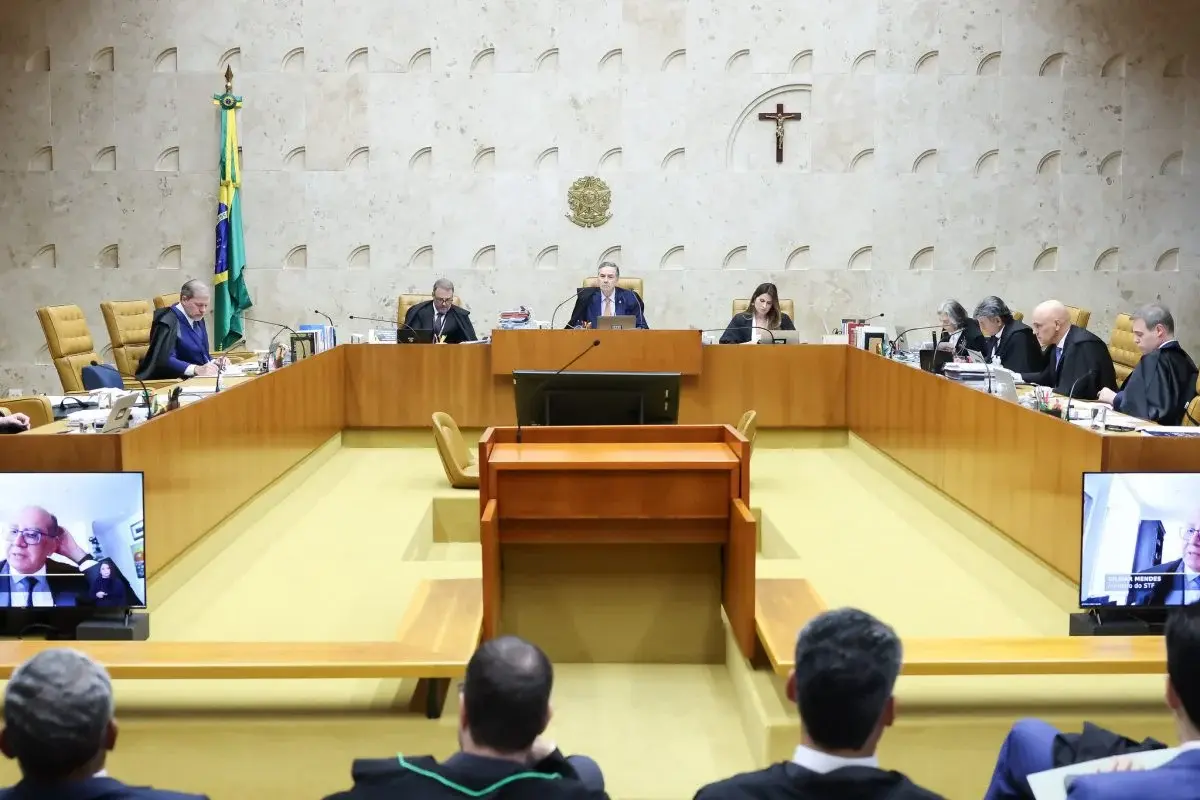
Anyone who has a quantity of up to 40g of the substance for individual consumption will not be held criminally responsible - Photo Reproduction/Antonio Augusto/SCO/STF
The Federal Supreme Court (STF) took a significant step in regulating drug use in Brazil. In a historic decision, the Court established this Wednesday (26) a marijuana limit to differentiate users from dealers. The decision comes amid an intense debate about the criminalization of drug use and the overcrowding of the Brazilian prison system, which has a high number of prisoners for crimes related to drug trafficking.
The lack of clear criteria to differentiate users from dealers meant that many users found in possession of small quantities of drugs were arrested. According to the thesis approved by the ministers, pursuant to paragraph 2 of art. 28 of Law 11,343 of 2006, anyone who, for their own use, acquires, stores, keeps in storage, transports or carries with them up to 40g of cannabis will be presumed to be a user. sativa or up to six female plants, until Congress legislates on the matter.
Context of the Decision
The Court decided by majority that possessing marijuana for personal use does not constitute a crime. Thus, a person who has a quantity of up to 40g of the substance for individual consumption will not be held criminally responsible. However, this does not mean that the practice has been legalized. Its use is not permitted anywhere, and anyone who possesses the substance, even in quantity for their own use, will still be committing an illegal act., that is, violating the law. If this happens, sanctions will be applied, such as a warning about the effects of drugs and an educational measure that will require participation in an educational program or course.
Implications of the Measure
Defining a clear limit for drug possession aims to provide an objective criterion that can be used by judges and police authorities. Previously, the absence of a specific standard allowed for subjective interpretations, which often resulted in punitive decisions for minor offenders. With the new guideline, a significant reduction in the number of arrests of marijuana users is expected. However, the president of the STF, minister Luís Roberto Barroso, clarified that the 40g limit is "relative".
In other words, if someone possesses less than 40g of marijuana, but demonstrates behaviors characteristic of trafficking, according to the police officer's assessment, that person may be criminally prosecuted. This determination is temporary and will remain in force until the National Congress establishes new criteria. At the moment, there is a project being processed in the Chamber of Deputies that criminalizes both possession and trafficking, but does not define a clear parameter to differentiate the two.
Distinctions between Decriminalization, Depenalization and Legalization
Decriminalization: refers to the removal of criminal sanctions for specific conduct. This means that although the activity in question may still be illegal, such as possessing small amounts of certain drugs for personal use, it would not result in criminal punishments such as imprisonment or a criminal record. In other words, this implies replacing the deprivation of liberty, as occurs in prison sentences, with sanctions of different types, such as restrictions on rights.
Decriminalization: Means that the conduct remains illegal, but the legal consequences are reduced to minor infractions, such as fines or warnings, rather than severe criminal penalties. In other words, this implies no longer classifying conduct as criminal. In legal terms, the penalty is abolished. However, it is still feasible to impose disciplinary or compensatory measures of an administrative or civil nature. This is often seen in issues relating to drug use or certain forms of commercial activities.
Legalization: It involves the complete removal of laws that prohibit an activity, making it legal and regulated by the State. This allows the activity to be carried out openly, subject to specific controls and regulations. In other words, this implies establishing a set of laws that enable and regulate specific behavior. These standards structure the activity and stipulate its conditions and limitations - such as production and sales rules, for example. Furthermore, it also provides punishments for those who do not comply with what is established. In practice, permission is given through regulation.


