
IR 2024 declaration: Haddad says the government will review the income tax exemption

Haddad declared that the government will carry out a new analysis of the IRPF exemption range in 2024, highlighting the need for this review, especially in light of the increase in the minimum wage.
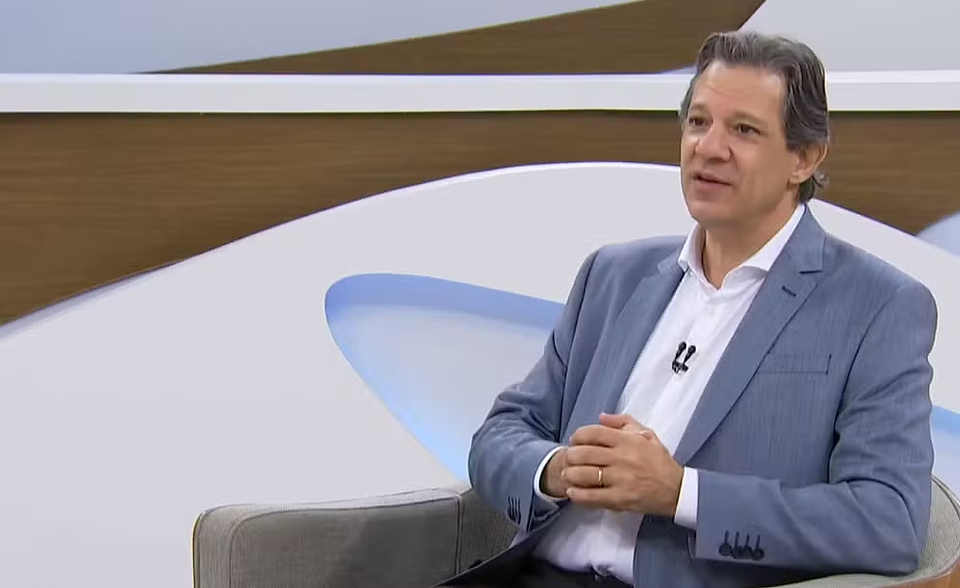
Minister of Finance, Fernando Haddad, participates in the "Roda Viva Program". — Photo Reproduction/TV Cultura
The Minister of Finance, Fernando Haddad, stated on Monday (22), that the government will carry out a new review of the Personal Income Tax exemption range (IRPF) in 2024. He highlighted that this review is necessary, especially given the increase in the minimum wage, and that President Lula has already requested an analysis to adjust the issue of the exemption range. These statements were made during his participation in the Roda Viva Program on TV Cultura.
In May last year, the government issued a Provisional Measure that raised the income tax exemption range from R$1,903.98 to R$2,112. Furthermore, to exempt those who receive up to two minimum wages, the text also introduced a monthly deduction of R$528 at source. In practice, those who earned an income of up to R$2,640 (R$2,112 + R$528), corresponding to two minimum wages in 2023, were exempt from Income Tax for individuals. However, on January 1st of this year, a new minimum wage level of R$ 1,412.
Therefore, people who receive up to two minimum wages, now totaling R$2,824, are subject to taxation again, as per the warning from the National Association of Tax Auditors of the Federal Revenue of Brazil (Unafisco). This Tuesday morning (23), during an interview, Lula ratified the government's intention to readjust the Income Tax table and stated that responsibility for this task will be attributed to Haddad.
Tax Reform
Approved by the National Congress in December 2023, the tax reform regarding consumption taxes establishes a period of 90 days for the government to present proposals for changes to income taxation to the National Congress. The Finance Minister stated that the economic team seeks inspiration from best international practices, although he did not provide details on the specific approaches being studied by the Executive.
"Brazil charges a lot of taxes on consumption, which burdens the poor more than the rich, who consume more in proportion to their income than the rich, and charges little especially from those who earn a lot", stated the minister.
This year, the government will also pay attention to regulating tax reform. Although the general lines of the proposal are already outlined in the Constitution, some points await regulation, such as the decision on which items will be included in the basic basket, benefiting from the exemption from future consumption taxes at federal, state and municipal levels, as well as the establishment of guidelines for the operation of "cashback" - the refund part of the tax paid to low-income families. The proposal also stipulates a 180-day deadline for forwarding these regulations to the Legislature.
According to Haddad, during the first half of this year, it will be crucial to move forward with the complementary laws that govern the constitutional amendment referring to tax reform. The debate is well structured, covering topics such as the definition of the basic basket, the items included and excluded, the places where there will be cashback and those that will not.
Central Bank
The Minister of Finance highlighted the challenging nature of the relationship between the government and the Central Bank, highlighting, however, that the teams from the Ministry of Finance and the BC played a constructive role of an institutional nature. It is worth noting that last year, President Luiz Inácio Lula da Silva (PT) expressed persistent criticism of Roberto Campos Neto, current president of the BC, and the conduct of monetary policy, including the definition of the basic interest rate, the Selic.
Lula is the first president who was unable to make changes to the BC board, including the presidency, due to the BC's autonomy approved by Congress during the administration of former president Jair Bolsonaro (PL). Campos Neto, for example, has a mandate until 2024. Asked about who will be nominated for the presidency of the BC, Haddad said that he has not yet spoken to Lula about the topic, but that a decision could be made “more towards the middle of the year”.


