


Great Lunar Standstill: Find out everything about this Friday's astronomical event and how to watch

Lunisticio occurs when the Moon and Earth reach the most extreme points of inclination in relation to the horizon, and this phenomenon only repeats every 18 years.
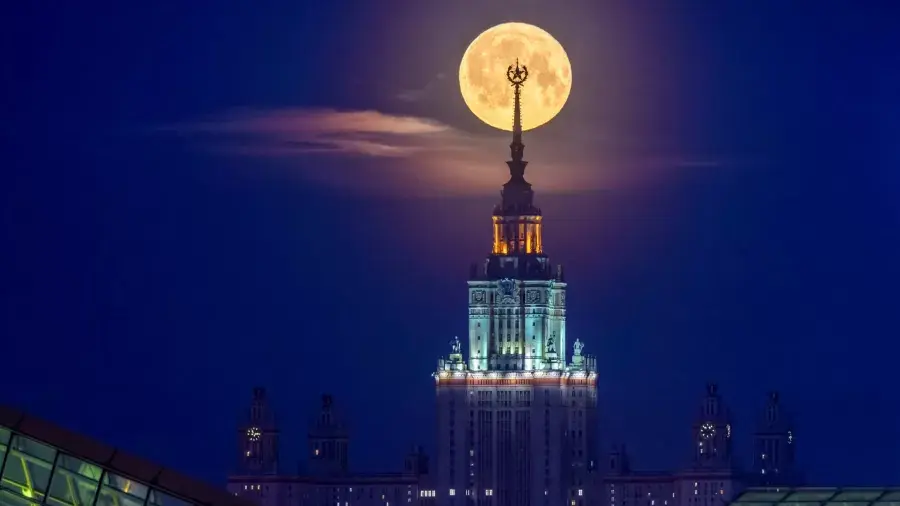
The phenomenon has not occurred since 2006 and will only be visible in the Northern Hemisphere - Photo Reproduction/Reuters/Marina Lystseva
This Friday (21), astronomy enthusiasts will have the chance to witness a rare and spectacular celestial event that happens every almost two decades: The Great Lunar Standstill. This phenomenon, which fascinates both professional and amateur astronomers, promises to provide a stunning view of the Moon and the night skies.
What is the Great Lunar Standstill?
The Great Lunar Standstill, called lunistice, occurs when the Moon appears to "stop" in the sky for a brief period before changing its apparent direction of movement, that is, it moves higher in the sky, appearing stationary to people on the ground. This phenomenon is a visual effect resulting from the complex interaction between the Moon's orbit around the Earth and the Earth's orbit around the Sun.. Normally, the Moon follows a regular path across the sky, but during the Great Lunar Standstill, that movement appears to pause.
Lunistice occurs because the moon does not follow the same path as the sun. The solar system is essentially flat, with planets, dwarf planets and asteroids orbiting the sun in the same plane, called the ecliptic. The Earth rotates on an axis tilted at 23.4 degrees relative to this plane, causing the Sun to rise and set within a range of almost 47 degrees over the course of an entire year. The moon's orbit, in turn, is tilted 5.1 degrees relative to the ecliptic, allowing moonrise and moonset to occur within a 57-degree range in any given month.
In short, this event occurs when the inclinations of the Moon and Earth reach their maximum, resulting in the Moon rising at the most northeastern point on the horizon and setting at the most northwestern position. Although the Moon never actually stops, Earth's perspective means that the star remains visible for a longer period of time in the sky.
When and where will it happen?
The Great Lunar Standstill only occurs every 18 and a half years. This year its beginning will be visible this Friday. This day will also be ideal for observation, as there will be a Full Moon. The lunistice will be visible from various parts of the world, including North America, Europe and parts of Asia. Unfortunately, it will not be possible to observe it directly from Brazil, but the strike will be broadcast live from Stonehenge, a stone monument located in the United Kingdom. The way in which the phenomenon can be observed will also be influenced by the geographical location, the phase of the moon and the atmospheric conditions at the time of observation.
According to English Heritage, the company responsible for managing Stonehenge, the monument's display is possible due to the connection between its architecture and the stars. The construction is believed to have been influenced by a significant lunar standstill, as some of the axes align when the Moon is in the phenomenon's position. The event will be broadcast at 5:30 pm, Brasília time, on the English Heritage channel.
How to Watch the Event
Choose the Right Location: Look for a location with little light pollution, such as rural areas or parks away from city lights. The less artificial light, the better the visibility of the Moon and the phenomenon.
Check Weather Conditions: Make sure the sky will be clear on the night of the event. Clouds can obstruct the view of the Moon, so monitor local weather forecasts.
Recommended Equipment: Although the phenomenon can be seen with the naked eye, using binoculars or a telescope can enhance the experience by allowing a more detailed view of the Moon and its features.
Astronomy Apps: Use astronomy apps that can help locate the Moon in the sky and provide real-time information about the event.
Observation Schedule: The Moon will begin to appear to "stop" shortly after sunset. The culmination of the phenomenon, where the stoppage will be most evident, will occur at approximately 10 pm Northern Hemisphere time. The phenomenon can be observed until midnight to see the change in direction.
The Importance of the Event
The Great Lunar Standstill is more than a visual spectacle; it offers a unique opportunity to observe and study the orbital dynamics of the Moon and Earth. For astronomers, both professional and amateur, this phenomenon provides valuable data about celestial mechanics and the interaction between celestial bodies.


