
ENovo ICMS raises the price of gasoline this Thursday; check estimates by state

Throughout the national territory, the collection rate will be set at R$ 1.22 per liter. Currently, the rates are determined individually by each state and are proportional to the value, normally varying between 17% and 23%.
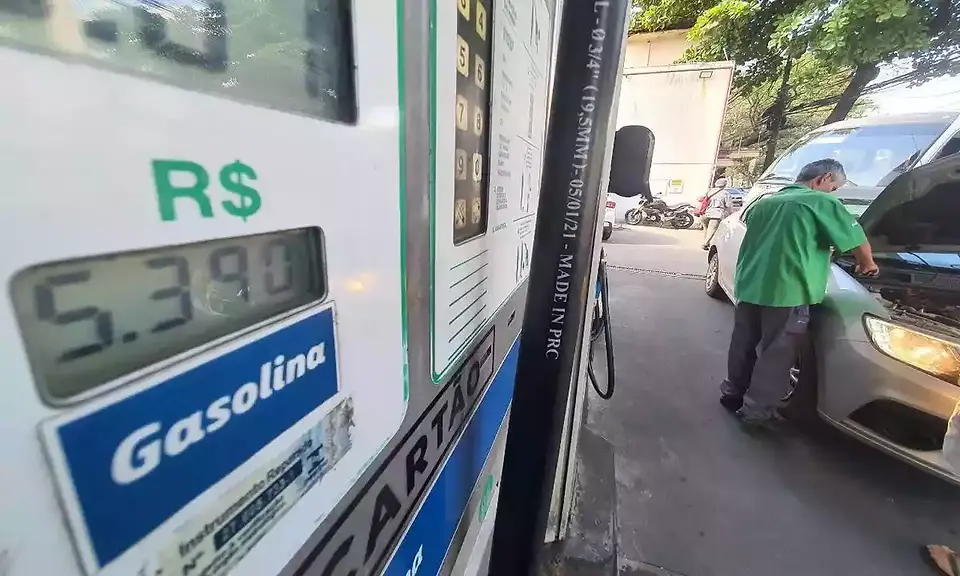
Foto Reprodução / Internet
As of this Thursday (June 1st), the Brazilian states began to implement changes in the tax collection system. Tax on Circulation of Goods and Services (ICMS) on gasoline and ethanol. Consultancies estimate that this new measure will likely result in an increase in the average price of a liter of fuel in Brazil. The updated ICMS for gasoline came into effect two weeks after Petrobras announced its recent pricing policy, ending the International Par Price (PPI) that was in effect for more than six years, during the administrations of former presidents Michel Temer and Jair Bolsonaro. In the previous model, it followed the movements of the international market.
The tax change
The new ICMS collection model was instituted by Complementary Law 192 of 2022, approved by Congress in March of the same year, with the support of the former president Jair Bolsonaro (PL) e do fuel sector. The change was implemented due to concerns about possible fraud in the previous system, in which each state set its own rate. The main change is the adoption of a single amount throughout the country, and the tax is now charged only from producers and importers, excluding distributors and resellers from the collection chain.
In March of this year, the National Council for Finance Policy (Confaz) defined the corresponding fixed rates. As for diesel, the change came into effect on May 1, with the implementation of a fee of R$ 0.94 per liter. Across the country, the new charge will be R$ 1.22 per liter. Previously, the rates varied according to the value and were determined individually by each state, usually between 17% and 23%.
Although the effects of the new ICMS on the final price of gasoline at gas stations are not yet fully known, economists claim that the increase was inevitable. According to an estimate by the Brazilian Infrastructure Center (CBIE), the current average ICMS charged by the states in the previous model was approximately R$ 1.0599 per liter of gasoline, lower than the new fixed rate that will be implemented. Also according to the CBIE estimate, starting this Thursday, with the implementation of the new price of R$ 1.22 per liter, an average increase of R$ 0.16 per liter is expected, resulting in an average increase of 22 % exclusively on ICMS.
Prices
Several elements besides taxes influence the final amount charged by gas stations. This includes selling prices at refineries, transportation costs and distributor profit margins. For this reason, there are variations in price estimates. A National Agency for Petroleum, Natural Gas and Biofuels (ANP) monitors the market, but does not participate in setting prices. There is no establishment of maximum, minimum values, tables or authorization requirements for updating prices passed on to consumers. The ANP clarifies that "prices are determined by the market, by the agents that operate in it, such as refineries (both public and private), plants, distributors and gas stations".
ICMS
According to Petrobras, ICMS represents just a portion of the total price of gasoline, contributing about 20.5% of the total cost of the product to the consumer. Therefore, despite the average increase of 22% in ICMS across the country, according to the CBIE calculation, the impact on the consumer will be mild.
According to Comsefaz (National Committee of Secretaries of Finance, Finance, Revenue or Taxation of the States and the Federal District), which represents the Secretaries of Finance of the states, stated that the new established collection method is based on the concept of essentiality and adopts a single rate at the national. This change in the way the tax is calculated could reduce part of the price reduction announced by Petrobras in mid-May. At that time, the state-owned company had informed that the value per liter of gasoline would suffer a significant reduction, from R$ 3.18 to R$ 2.78, representing a decrease of R$ 0.40 or 12.6%.
Tribute by state
A unification of rates and the adoption of a threshold in reais (known as "ad rem") of R$1.22 for all states will have different impacts on gasoline prices, due to the fact that each state currently charges a different percentage of ICMS on the price of that fuel. According to the calculations carried out by the Consultory read, a company specializing in oil, gas and renewable energy, most states are expected to experience an increase in the final consumer cost of gasoline. However, in Alagoas, Amazonas and Piauí, there is the possibility of a reduction in final gasoline prices.
Possible compensation
O Minister of Finance, Fernando Haddad, recently suggested that Petrobras could adopt measures to avoid or reduce the impact of price increases resulting from tax increases. On that occasion, the minister spoke specifically about the increase in PIS/Cofins, informing that the readjustment of taxes was scheduled to take effect in July, but he made no mention of the change in ICMS taxation.


